



TELECOM TRAFFIC MONITORING SYSTEM
Designed for regulators that are looking to report on subscriber usage across multiple mobile network operators
THE CHALLENGE
Compliance monitoring activities often vary from one regulator to the next. However, all regulators face the challenge of gathering reliable reports that are fit to fulfil the required enforcement duties. This often includes the verification of subscriber count, voice messaging and data usage, revenue as billed and also tax returns declared.
What Types of Traffic Can Be Monitored?
National Subscriber Traffic
Clear and concise summaries of the in-country subscriber usage for voice, messaging and data. The reports include breakdowns such as by hour, day, and service type enabling the user to distinguish the different usage activity over time. Separate standardised control reports are used to assess the self-integrity of the BSS data, using thresholds to control alert generation when exceeded.
Outbound Roaming Subscriber Traffic
Visualise how roaming revenues change rapidly from day to day according to world events. Identify trends and patterns that may indicate a problem. Use change detection controls to alert if roaming revenues suddenly change (using configurable thresholds).
Digital Transactions - Tax
Report billing and financial data which can be used to audit tax obligations. Prevent over-taxation and work towards verifying accurate tax collection.
Adjustments
Analyse the credit and debit adjustments made to prepay balances and bundle amounts. View channels responsible for changes, monitor overall credits made by channels and identify outlying credits that may indicate misuse.
Recharges
View summaries of all subscriber recharge activity, including the recharging of airtime, credit, and different types of bundles (e.g. data bundles, mixed bundles etc.).
Subscriptions
Subscription data is summarised into a range of reports. This includes tariff plans, bundles and passes for both prepaid and postpaid subscribers.
Transfers
Monitor the local transfers of airtime or mobile credit that is sent between subscribers. Report on the transfer fees generated by all transfer transactions. Identify any outlier transfer values or larger trends that require investigation.
What Reporting Is Available?
Reporting is driven entirely by the data sources that are provided. We are able to advise what data sources you need in order to meet your reporting goals.
From day one, we provide a range of standardised control reports based upon our experience in the industry. These controls are delivered to you without the need for a lengthy setup and configuration period.
Key reporting:
- Subscriber usage analytics
- Baseline controls
- Revenue analytics
- Monitoring and exceptions
- Bespoke controls that suit your specific needs

Regulatory Benchmark Reporting
By using the BSS CDRs from each mobile network operator (MNO), if required Imperium™ can produce comparative statistics on subscriber count and revenues.
Subscriber Count
To provide a clear summary of subscriber count, Imperium™ reports the following: Prepaid: Invested subscriber count (how many prepaid SIMs have credit) Active subscriber count (how many prepaid SIMs show network usage) Postpaid: Active subscriber count (how many postpaid SIMs show network usage)
Revenue Distribution
The breakdown of revenue for voice, messaging and data is provided for each operator. The statistics produced are based on the CDR contents from the BSS. Results are a live representation of the mobile operator's subscriber usage.
System & Security
The Imperium™ system provides a simple user interface (UI) that facilitates system administration, reporting and case management.
Roscom are ISO27001 accredited and as such data security is at the heart of what we do. Here are some of the key areas of security for consideration:
- On-premise installations available
- Multi factor authentication
- Full user access and modification auditing
- Configurable user access levels

Architecture And Design Principles
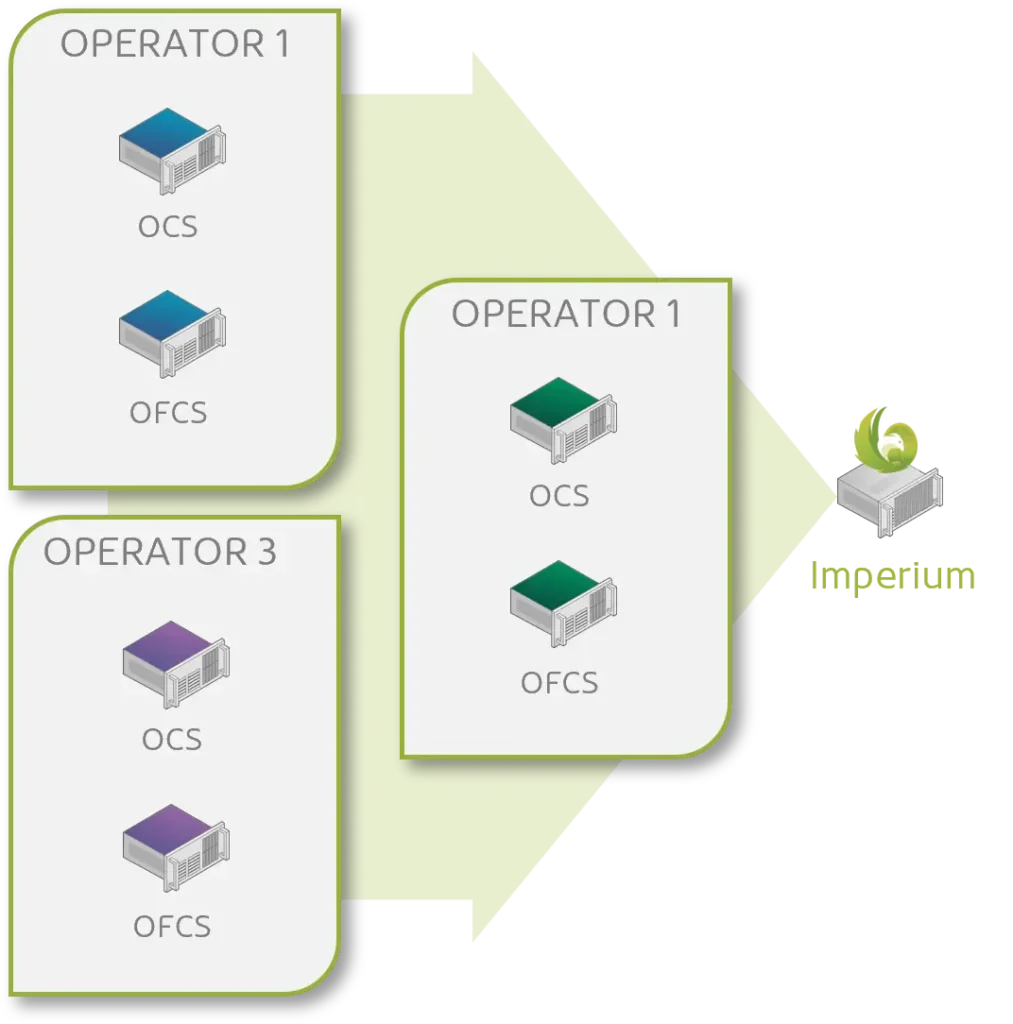
Imperium™ has been designed to act as a big data assurance platform that can receive full, feeds direct from the platforms as designed.
One of the key principles of design was for the system to be easy to use and require minimal configuration. Following this pattern, reporting has been designed with simplicity in mind, meanwhile still providing the details needed to perform root cause analysis.
Imperium™ is an on-premise service.
The process for a base system is to:
- Identify key assurance requirements
- Identify data sources required
- Customise control framework
- Provision a daily export
Request A Brochure

If the compliance activity you are looking for is not shown on this page, please get in touch with us and we can provide more information